Showing posts with label Multicultural Japan. Show all posts

Thursday, December 6, 2012

Ainu Maori Exchange Program in need of support!

The Ainu Maori Exchange Program Story

In January 2012, a Maori leader, Te Ururoa Flavell visited Ainumosir (Hokkaido) and Tokyo and witnessed the work Ainu people are doing in their communities to revitalize their culture, language, and rights. He immediately suggested that Ainu youth come to Aoteroa (New Zealand) to see how Maori community members have been working to ensure cultural survival.

Immediately, the Aotearo-Ainumosir Exchange Program Committee to seek out participants. After a rigourous interview process, we chose 7 Ainu youth to go on the exchange starting end January for 5 weeks. Once they reach Aotearoa, they will study, experientialy, about the various ambitious endeavors of Maori people who have successfully revitalized their rights as indigenous people while living with strength in the society of New Zealand.

Their Struggle
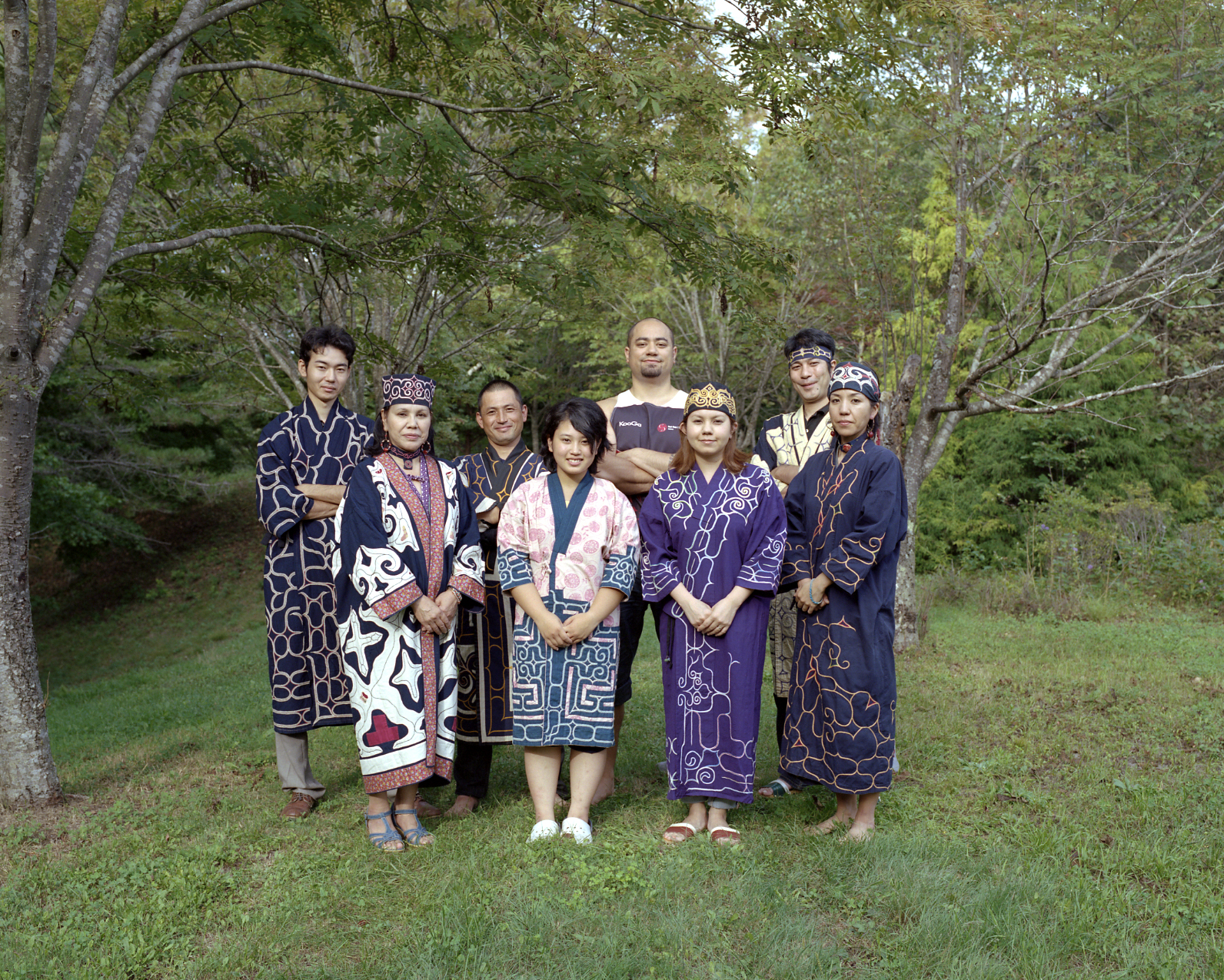
Photo of 7 Participants

The situation the Ainu people find themselves in Japan, while similar in many ways, is also very different from that of the Maori people. The Ainu were just recognized as the indigenous people of Japan in 2008 and the Japanese government has only just starting to draft proposals for Ainu policies. In New Zealand, the Maori have been successful in their tireless work to advance the revitalization of their rights as indigenous people since the 1970s. Furthermore, the Maori people are contributing significantly to the development of New Zealand society in all of fields, whether economic, social, cultural, or political. The Maori language is an official language along with English.

It is certain that through this exchange program Ainu participants will gain enormous encouragement from their Maori counterparts who are making great strides in society while maintaining their culture and values as indigenous people.

It will be an opportunity for young Ainu people in search of their Ainu identity to take their first steps on the Ainu path. Due to anxiety about deeply rooted discrimination which pervades society, or the inability for people to discover meaning in being Ainu, there are still many people who have yet to assert their Ainu identity. According to a Hokkaido Prefecture survey there are about 24000 Ainu people, however in reality there are several times more Ainu people than that figure leads us to believe. Out of the 5,000 to 10,000 Ainu people living in the Tokyo metropolitan area alone, only around 100 of them are active as Ainu.

What They Need & What You Get

They are sending 7 Ainu youth, 3 Ainu comittee members and 3 interpreters for 5 weeks from January 20th to February 22nd, 2013. The Maori will graciously cover the majority of food, transportation, and lodging, but they need to raise money for:

-the remainder of airplane tickets & travel insurance
-daily expenses in Aotearoa
-costs for holding reporting sessions and publishing reports
-funds to ensure we can continue the exchange in the future

They are now running this as a Flexible Funding Campaign on Indiegogo here.
All funds received, no matter how much, will go to the Aotearoa-Ainumosir Exchange Program and used to fund Ainu youth exchange trips.

They have unique perks all made by Ainu to offer to you. Contributions over $50 (including overseas shipping costs) receive a beautiful woodblock print or T-shirt made by Ainu Artist Koji Yuuki specially for this programme as a token of our appreciation.

AINU JAW HARP MUKKURI $25
Mukkuri

ORIGINAL PROGRAM T-SHIRT IN BLACK OR WHITE (ALL ADULT SIZES) $50
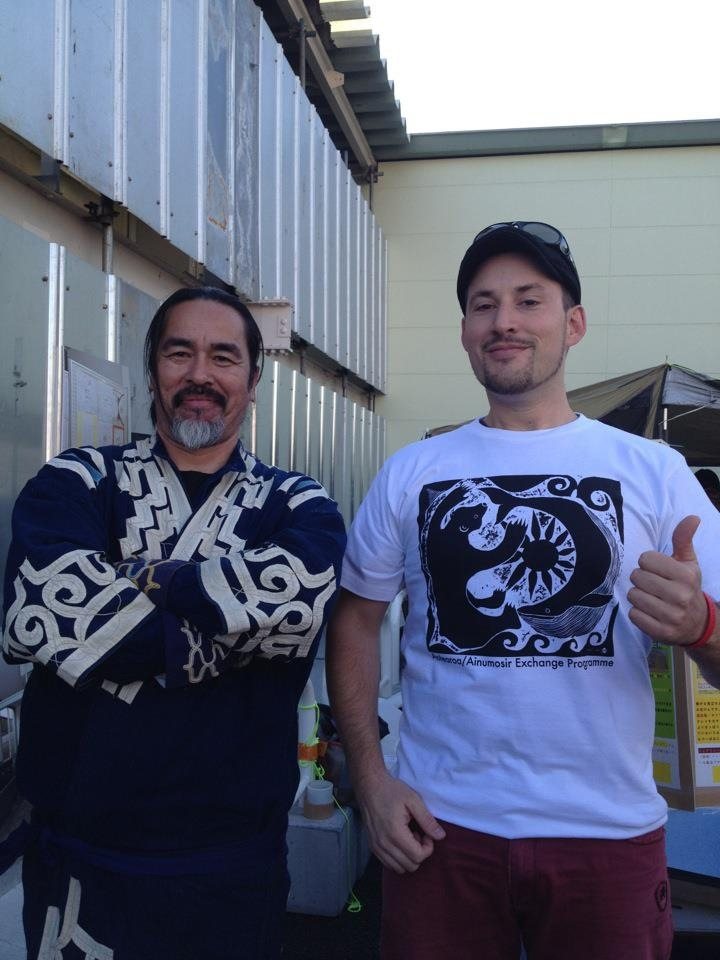
Program T-shirt
AINU WOODBLOCK PRINT (SMALL) BY KOJI YUKI (PHOTO UNAVAILABLE) $100

AINU WOODBLOCK PRINT (LARGE) BY KOJI YUKI (PICTURED BELOW) $400
Woodblock print for donation

The Impact

Seeing with our own eyes the endeavors of our indigenous Maori brothers and sisters, coming in contact with their passion, touching it with our own hands, feeling it with all of our senses, will surely inspire us to come to terms with our sense of Ainu identity which some of us are still grasping for in the dark. We sincerely hope that this exchange will give us an opportunity to become aware, to see with brand new eyes, the deepness of the traditions that our tipuna (Maori word meaning ancestor(s)) have left for us. Participants in this program will become even more aware of the significance of being Ainu, and if they are able to stand firmly in their decision to travel on the Ainu path, they will be able to make important strides for a new future for the Ainu people. At the same time, we believe it will create an opportunity for Japanese society to become more a fair society- one that respects a diversity of values. We do not intend to have this program available only for this year, but rather, we hope to make this a mutually-beneficial exchange that lasts long in the future, where we not only send Ainu to New Zealand, but also have Maori people visit us where we live, further solidifying the bonds between the Ainu and Maori people.

Other Ways You Can Help

For those who prefer to make a money transfer within Japan:
●Individual contributions accepted from 1000yen in increments of 1000 yen
●Organizational/Corporate contributions in increments of 10,000 yen   
●Donation method- Bank Transfer Deposit:

Mitsubishi Tokyo UFJ Bank Hashimoto Branch
(Ordinary) 0526312
Aotearoa Ainumosiri koryu puroguramu jikkouiinnkai   
Postal Transfer: 0022-7-54530 Aotearoa Ainumosiri koryu puroguramu jikkouiinnkai

Saturday, January 15, 2011

The Other Hafu of Japan- A review of Hafu Film by Brett Fujioka

An excellent review of Hafu Film appeared in the Rafu Shinpo this week:

Is a ship the same if you take it apart piece by piece and replace its frame? No simple answer exists, as anyone who has tackled this philosophical Rubik’s cube knows.

The ethno-national equivalent to this riddle grows exceedingly more complicated with the swelling number of international unions each year. Statistics in 2004 chart that 1 in 15 marriages in Japan were international and that 1 in 30 children born there possesses a parent of non-Japanese descent. Japan’s ethnic constituency is rapidly changing and its people may need to rethink what it means to be Japanese in a country where blood and national identity are considered one and the same.

The same applies for the hafu (mixed Japanese) community. The lives for each individual half-Japanese vary from person to person and the filmmakers for the upcoming documentary, “Hafu,” and their subjects best represent this.

David Yano, who is of Japanese-Ghanaian descent, is among those profiled in the film.

“Hafu” is the tentative title for an upcoming documentary in Japan following the lives of several half-Japanese individuals as they explore their identities.

Both Megumi Nishikura and Lara Perez Takagi spent most of their lives away from Japan. Takagi is half Spanish and stayed in Madrid, Sydney, Washington D.C., and Ottowa due to her diplomat father’s itinerant career. She eventually completed her higher education at the Francisco de Vitoria, Complutense and Waseda Universities before finally returning to Japan.

Nishikura, likewise, lived her childhood spread throughout the world. She stayed in Beijing, Manila, Honolulu, DC, Berlin, London, and Los Angeles and graduated from New York University.

“Lara and I have unusual stories and come from international backgrounds,” said Nishikura in an interview with the Rafu. “I don’t know if that’s representative of a lot of the mixed Japanese community.”

There’s a reason why they’re so hesitant to pinpoint a grand narrative for the hafu experience. There is no all-encompassing hafu story and the eclectic subjects of the documentary are indicative of this.

David Yano, “the poster child” of the documentary is of Japanese-Ghanaian descent. Other individuals include the Mexican-Japanese Oi family, Venezualan Japanese “Mixed Roots” founder Edward Sumoto, and an unannounced Japanese American girl visiting Japan for the first time. The distinction they each share is that they bear one, sole Japanese parent.

They took into account during the recruitment process that there’s something of a “Hafu Wave” in the Japanese entertainment industry. Musicians, models, sports stars, actors, and even adult film stars of half-Japanese descent maintain a distinguishable mark on television. This may have made Japanese audiences more acquainted with biracial children in the modern world, but also introduced a set of stereotypes both filmmakers aspire to break.

“It’s on a superficial side,” Nishikura said on their presence in the media. “It’s like: ‘Oh they’re so cute. Wow, they’re so talented.’ It’s a motivation on our part to break the stereotype that there might be that all hafu are mixed with a Caucasian, bilingual, or model perfect beautiful,” said Nishikura.

“It’s impossible to make the perfect combination and address all the possible factors [in being hafu],” she continued. She listed several possibilities to prove this point. “Is your mother or father Japanese? What other nationality are you mixed with? Did you grow up in Japan? Did you grow up abroad? Did you go through the Japanese school system? Did you go through the international school system?” asked Nishikura.

The “ hafu experience” is extensive to the point that they acknowledge that they’re overlooking recurrent tales from this demographic like the children of American servicemen or military brats. “People want this seminal piece on the hafu experience,” said Nishikura. “And we have to address every single question and every single type of hafu. That isn’t very realistic.”

In fact, the same could also be said for Japan as a nation. The predominant philosophy in the country is that it’s a nation under one—not just one ideology and rule, but one race and creed functioning in perfect harmony within society. Former Prime Minister Taro Aso echoed such sentiments on Oct. 15, 2005 at the opening ceremony for the Kyushu National Museum. “[We are] one culture, one civilization, one language, and one ethnic group,” Aso said. He further opined that it was the only country to do so. This failed to bear in mind that hafu, indigenous Ainu, Okinawans, and other multigenerational non-Japanese immigrants are residents of the country.

This viewpoint carries its own set of ignored consequences including the bullying epidemic in Japanese schools. The Japanese Ministry of Education reported over 125,000 cases of bullying in the 2006-2007 school year.

Alex Oi, one of the children documented, is of Japanese/Mexican descent and got bullied at school due to his grammatical struggles in juggling a multilingual repertoire of Spanish, Japanese, and English. Nishikura and Takagi told similar stories of getting teased in school for their alien appearance, but were reluctant to describe it as a general occurrence for hafu.

They did, however, invoke the suicide of a half-Filipino girl as an example to how far it can go. On Oct. 23, 2010, 12-year-old Akiko Uemura hung herself at her family’s home. Her father, Ryota Uemura, reported that her Filipino mother sat in on an observation day. That’s when the bullying began.

“Like Alex was being bullied, it’ll show that it’s happening and its part of his story,” said Nishikura. “I think it’s good to show that it’s not the first time that it’s happened where kids are being bullied for not looking entirely Japanese.”

Perhaps with Japan’s evolving social constituency, these isolated stories may someday become a thing of the past. Each filmmaker denies that being hafu is the remedy to current prejudices or Japan’s economic woes as Masaru Tamamoto implied in an Op-Ed for the New York Times, “Japan’s Crisis of the Mind,” on March 1, 2009.

“We’re not trying to make a specific comment about this being the future and if everybody mixes Japan will be saved,” said Nishikura. “I think that’s stretching it too far.”

Despite the reality of hafu diversity, they still strive to discover a consistent thread in these stories to develop common themes in their lives and garner support from their viewership. At the same time, they dream of a place where children are free of the schoolyard taunts of yesteryear. Where multiculturalism is more commonplace to the extent that it’s readily accepted.

“I think that’s a Japan I would like to live in,” Nishikura said. “Where it’s assumed that you’re Japanese first before something else.”

“Hafu Film” is planned for completion later in 2011. For more information visit hafufilm.com.